
chronic illness, healing, mental health, MS

The 7 Phrases That Spike MS Symptoms (And What to Say Instead)

Wednesday morning.

 Brain fog so thick I couldn’t remember my daughter’s teacher’s name. 

My first thought: ‘My body is attacking itself.’

My second thought: ‘What if that phrase is making everything worse?’

So I decided to test it.

When I started saying ‘My body’s trying to get my attention’ instead of ‘My body is attacking itself,’ something shifted.

I stopped feeling like I was in a war.

I started getting curious. ‘What is it trying to tell me?’

I noticed a pattern. Every time I spiraled into ‘This is just going to get worse,’ my fatigue would spike within hours. 

Not because the disease got worse, because my nervous system did.

7 Most Common, Least Helpful Phrases, Reframed

1. “I’ll never be the same again” → “I’m becoming someone new”

2. “My body is attacking itself” → “My body needs guidance to heal”

3. “I can’t trust my body anymore” → “My body’s trying to get my attention”

4. “I’m a burden to everyone” → “I’m worthy of support and love”

5. “This is just going to get worse” → “No one knows what the future holds”

6. “I should be able to handle this” → “This is hard, and I’m doing my best”

7. “If I just try harder, I can beat this” → “Healing requires patience, not force”

Why This Matters (More Than I Realized)

I used to think my thoughts were just… thoughts. Turns out, every time I told myself “I’m a burden” or “This is just going to get worse,” my body was listening. And responding.

These phrases flip on the stress response, the same system that would kick in if I were being chased by a bear. Except there’s no bear. Just me, sitting on my couch, flooding my nervous system with panic.

And stress? MS loves stress. It’s like pouring gasoline on inflammation. Within hours of a spiral, I’d feel it. Heavier fatigue, sharper pain, brain fog so thick I’d lose words mid-sentence.

Something finally clicked for me. My body can’t heal when it thinks it’s under attack. 

Healing happens in safety. In calm. When my nervous system can actually exhale.

Why I’m Not Pushing Positivity

I tried the “think positive!” approach. It felt fake. My brain knew I didn’t believe “Everything is amazing!” when I could barely get out of bed. The forced optimism just added another layer of failure.

That’s when I learned about neutral reframing. You’re not pretending everything’s fine, you’re just offering your brain a different pathway. A gentler one.

Every time you choose the reframe over the catastrophe, you’re literally building new neural connections. With repetition, those new pathways get stronger. The old ones fade. Not instantly. But gradually. Like training a muscle.

Want to Try This With Me?

Pick the phrase that shows up most for you, the one that feels automatic, like a reflex.

Write your reframe on a sticky note. I have one on my bathroom mirror, and one on my coffee maker, because apparently I need the reminder before caffeine.

When you catch the old phrase creeping in, pause. Read the reframe. Say it out loud if you can. You don’t have to believe it fully yet. You just have to practice offering it as an option.

That’s it. One phrase. One week. Let’s see what shifts.

❤️ Amanda

chronic illness, healing, Health, mental health, MS

The 6 Words That Became My Prison

‘I’ll never be the same again.’ I said those six words three weeks after my MS diagnosis, not knowing I was building a prison.

The moment I first said those words, I was trying to feel excited about all the growth in my garden. Instead, I was terrified and overwhelmed with all the work that growth was making for me. 

My body felt like I’d been squeezed through a pasta maker and dragged behind a pickup. I couldn’t find the energetic, motivated person I’d always thought myself to be. (I’d actually always struggled with fatigue but I had a close personal relationship with Denial.)

I repeated variations of that sentence daily for 3 years, swirling in the fog of confusion and grief a life-changing diagnosis brings.

Saying ‘I have MS’ is just a fact. But it’s the way I said it, with defeat, with finality, like it was my entire identity. That’s what kept me stuck. There’s a difference between ‘I have MS’ and ‘I AM sick.’


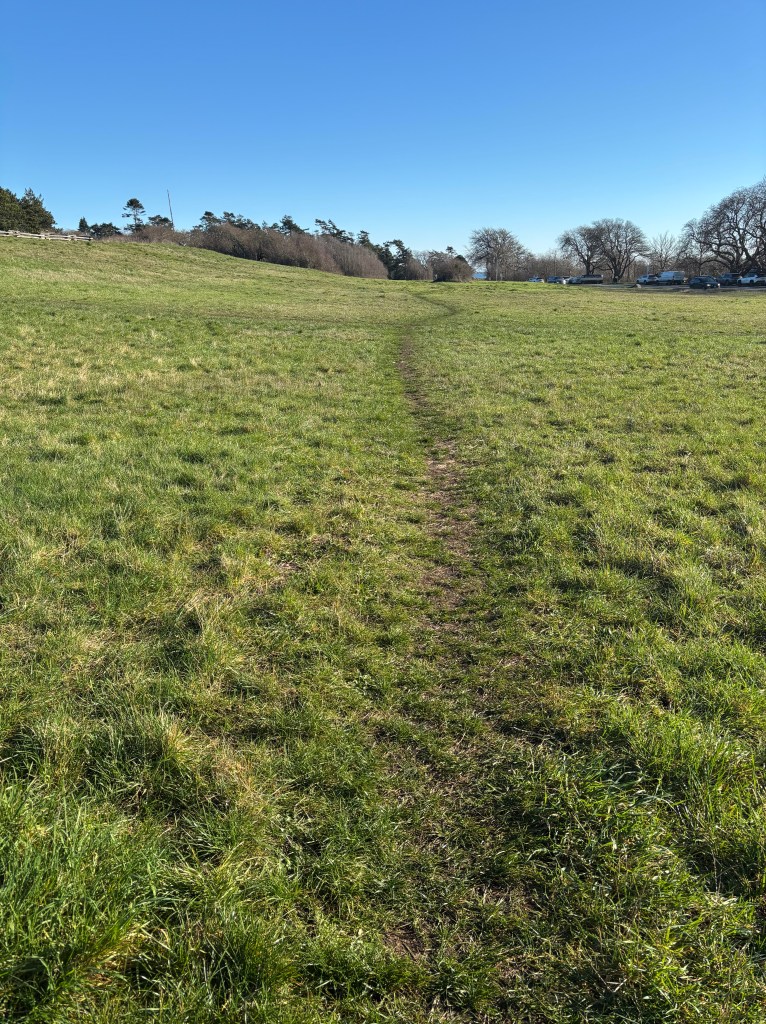
Your brain builds neural pathways like garden paths. The thoughts you repeat are the ones you “walk” most often. Over time, those paths become smooth and automatic. For better or for worse.

Because your brain’s job is to keep you safe, it takes your repeated thoughts as truth, so whatever you tell it often enough, it starts to believe and look for proof.

When you start choosing new, healing thoughts, you’re simply walking a new path. With practice, your brain learns to follow it naturally.

One morning I woke up thinking ‘I don’t think I can get out of bed today.’ So I didn’t. I spent 14 hours scrolling my iPad, feeling like a burden, spiraling into anxiety about the future. The next morning, before my brain could start its doom loop, I thought ‘What’s one small thing I can do?’ I watered the plants. That was it. But I wasn’t in bed all day.

When I worried that people thought I was faking because I could walk, or that I wasn’t ‘sick enough’ to be on disability, the vertigo would kick in and my ears would ring. Not exactly at that moment, it took some reflection to realize the connection, but the symptoms weren’t just random examples of my body betraying me. It was a self-fulfilling prophecy in action.

Staring at my garden one day, trying to squash the overwhelm at the weeding and pruning calling to me through the fatigue, I watched the hummingbirds flit from one buddleia to another. I envied their boundless energy and wished I could breathe it in.

Then I wondered what it would be like to be an animal and not have the overthinking, negative-biased human brain. That flipped the switch, and I thought, “What if I shift my perspective?” 

Adjusting the lens of how I looked at things, from “I’m so sick and tired of being sick and tired” to “What can I do to help myself heal?” was the game-changing move that stopped the carousel of terror and started a true healing path.

These days, when I catch myself thinking ‘I’ll never…’, I pause. Sometimes I can shift it immediately: ‘Not never. Just not today.’ Sometimes I can’t, and that’s okay too.

That garden I was standing in when I first said those six words? I learned to tend it in a different way. Some days with energy, some days from a chair, sometimes just watching the hummingbirds from the window. But I was no longer terrified of the growth, because I was part of it.

The prison was never MS. It was the story I told myself about MS. And I’m the one who holds the key.

What six words have you been saying to yourself? Write them down. Just notice them. That’s where the door starts to open.

❤️Amanda

What path are you creating with your thoughts?
MS

How I Stopped Being Mean to Myself (And Why It Healed My Body)

I was walking downtown with my family one day, carrying a pretty wooden box I’d found at the thrift store, when my right leg turned into cooked spaghetti and I face-planted on the sidewalk. 

My kids were young, and I guess it looked pretty goofy, or they were embarrassed, because they laughed. So I did too, as I picked myself up, examined the box for damage, and carried on. On the outside, a moment of oops.

In my head, I was Cruella de Vil, ready to skin myself for being so stupid. More concerned about my kids not being scared about their mother wiping out, and the state of the damn box than I was about myself.

That moment, laughing it off while mentally shredding myself, was standard operating procedure. I was really mean to myself. Like the stereotypical mean girl, berating and insulting myself. Like that would snap the MS out of me.

When my body was screaming for a rest, I’d call myself ‘lazy’ and keep pushing through. Then collapse for two weeks.

When I’d drop something, or my leg would pretzel and I’d fall, I’d get angry and call myself ‘stupid’ or ‘useless’.

I finally read something that asked: Would you talk to your best friend that way? Your child? Your pet?

The next time I fell, I tried it. Instead of ‘You stupid idiot,’ I attempted ‘That was graceful.’ Because, you know, humour. It felt ridiculous. Like lying to myself. But I kept trying. And slowly, so slowly, something shifted.

I realized that I deserve the same loving consideration and understanding I give to others. You do too.

Habitual negative thought ➡️ Supportive new thought

  • You’re lazy. ➡️ You deserve to rest.
  • Idiot. ➡️ Careful there, futterbingers. (Butterfingers)                                                                                                          
  • I’m so sick of being sick. ➡️ Healing takes time.
  • I can’t do anything anymore. ➡️ What’s one small thing I can do today?
  • People think I’m faking. ➡️ What other people think is none of my business. 

These are just a few examples. Pay attention to when you’re being hard on yourself, and change any negative criticism to an encouraging positive statement. Your inner critic needs to take a backseat. Preferably in another car going the other direction… or off a cliff. Because here’s what I’ve learned…

When I stopped punishing my adult self and spoke to my 5 year old self instead, my body started feeling safe enough to heal. The alarming symptoms she was sending to get my attention lessened the nicer I was to myself.

That scared, hurting little girl didn’t need a drill sergeant. She needed someone to tell her she was doing her best. That she was brave. That she deserved rest and kindness and patience.

She still does. So do you.

That pretty box? I keep it beside my bed to hold my daily gratitude post-it notes. It’s a little banged up but still functional and beautiful. Sort of like me.

Healing is not a straight line, it’s more like bumper cars. You’ll crash, back up, crash again, but you’re still moving forward. Day by day, with patience and consistency, it adds up and you will see progress.

What’s the nasty thing you catch yourself saying? What’s a simple reframe? Let me know in the comments.

❤️ Amanda

Be kind to yourself