The secret of change is to focus all of your energy, not on fighting the old, but on building the new.
-Socrates
I’m working on something new so keeping my posts short these days. This needs no explanation, and from a reasonably reliable source 😉, so I’ll just leave it there.
You’d think the hardest part of getting an MS diagnosis would be the crushing fatigue and slushy brain fog that made me feel like a 90 year old who lived on Happy Meals and never exercised. Instead, it was the grueling mental gymnastics of unfair expectations and disappointment in myself. I wasn’t just fighting MS, I was fighting myself.
I was a slave to the push-crash cycle and I couldn’t even see it. On the hard days, I’d feel worthless for not even being able to cook dinner. On the good days, I’d clean the house, weed the garden, bake cookies, cook dinner and exercise like I was still 25. Then, shocker, I’d end up in bed for two weeks.
It was a brutal case of identity whiplash. The grief of not being able to teach anymore, paired with the loss of identity tied to productivity that is so valued in our culture. It sucked. Big time.
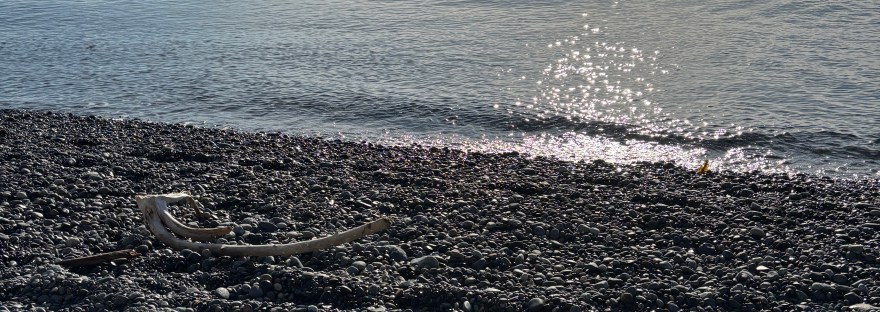
I was walking my favourite beach, hosting the world’s worst pity party when the light finally turned on. I was exhausting myself more by trying to remain the same person, by resisting the change my body was begging for. It wasn’t about letting the MS win, it was respecting that my body was trying to tell me something and I needed to listen if I was ever going to feel better.
Three qualities I developed over time that changed the game and got me on the right track were patience, self-compassion and consistency.
Patience
I replaced the moaning, impatient soundtrack of unfairness with a simple sentence: It took a long time to get this sick, it will take time to heal.
It took many reminders to myself that healing isn’t linear, it’s a spiral that keeps building on previous layers. Slow is not the same as stopped.
The urgency and pressure I was creating for myself in my determination were just more stressors on an already taxed nervous system.
Self-compassion
Energy is in very short supply when you’re dealing with MS. Beating yourself up burns energy you could be using to heal.
It was when I shifted from inner critic to my own personal cheerleader that real progress began. Talking to myself the way I would to my kids or my best friend created safety in my body so healing could get a foothold.
Self-compassion isn’t lowering the bar, it’s removing unnecessary weight you were never meant to carry.
Consistency
My five minute rule, which felt ridiculous at first, allowed me to prevent the crash cycle and build up strength through consistency.
Five minutes of exercise, meditation, cleaning the house, whatever. Not pushing myself to burnout, just showing up for myself day after day. Progress over perfection as a daily practice, not a bumper sticker.
Small, boring and repeatable is what actually moves the needle.
Healing is possible
Over the last decade, I’ve healed more than I ever believed possible. Not by pushing harder, but by changing my relationship with the process.
These are some of the things that helped me over time, that I wish someone had pointed out to me in the early days. If they help just one person get on the road healing a bit faster, sharing them was worth it.
What qualities do you feel are essential for healing?
I was on my morning walk yesterday, headphones in, half-listening to a financial podcast, something I never imagined myself doing. But here we are. When you find yourself single after thirty years, you do a lot of things you never imagined.
The podcast was by investing ninja Kristen Wonch, and she was explaining compound interest using the most relatable analogy I’ve ever heard: a rumour in high school.
Picture it. One person whispers something deliciously scandalous to two people. Those two people each tell two more. And so on and so on. After just 20 days? Two million people know that story.
But here’s where it gets wild. If that first person had told just three people instead of two, and each of those people told three, and so on, after 20 days, the number doesn’t climb to three million. It doesn’t even double.
It goes to 15 billion.
Let that sink in. One extra person. Compounded over time. An almost incomprehensible difference.
And that’s when it hit me. What if the thing spreading wasn’t gossip, but your healing?
When Everything Changed at Once
When my marriage ended after three decades, the fear that moved in alongside the grief wasn’t just emotional. It was financial. It was existential. It was: what does the rest of my life actually look like?
I did what I do. I researched. I listened to podcasts on my walks. I read everything I could get my hands on. And somewhere in that process of trying to figure out how to create financial stability, I started realizing that everything I was learning about financial habits applied, sometimes perfectly, to my health.
Because the truth is, both had been on autopilot for a long time. And autopilot, as it turns out, is not a strategy.
Tiny Habits Are Compound Interest for Your Health
I used to ask myself, in the slightly sarcastic voice I reserve for things I suspect are too good to be true: How much difference can it actually make to spend five minutes outside first thing in the morning? What does five minutes of meditation really do?
The answer, it turns out, is an insurmountable difference. Just not overnight.
Unlike the rumour mill, which spreads fast and furious and usually ends in someone crying in a bathroom, the compounding of healthy habits happens slowly. Quietly. Through tiny shifts that you almost don’t notice until one day you do.
A five-minute walk becomes a twenty-minute walk. The morning air clears your head enough that you sleep better. You sleep better so you have a little more energy. A little more energy means you feel like cooking instead of ordering in. Better food means your body feels different. Your body feeling different means you actually want to move it. And on it goes.
Each habit creates the conditions for the next one. That’s the flywheel. That’s the compound interest. The return on investment isn’t obvious at first, but it’s absolutely, undeniably real.
The Titanic and the 1% Shift
I’ve been thinking about the Titanic a lot lately. Bear with me.
That ship did not sink because of the iceberg, exactly. It sank because by the time the iceberg was a problem, the ship was already committed to its course. I’m speculating here, obviously, but I imagine the thinking was something like: well, this thing is too massive to turn, so let’s just keep going and hope for the best.
We all know how that ended.
But what if the captain had started a 1% course correction the moment he first heard about the ice? What if the adjustment had been small enough to feel almost pointless, but consistent, and early?
The tragedy might have been entirely averted.
We’re all captains of our own ships. And most of us, at some point, have had an iceberg on the horizon that we kept sailing toward because change felt too big, too slow, too hard to bother with. I’ll start Monday. I’ll start in January. I’ll start when things calm down.
The thing is, the ship’s already moving. You might as well start turning.
From Hindsight to Foresight
Here’s something I’ve made peace with recently: I wish I’d started investing in my twenties. My dad told me to. I didn’t listen. It was too complicated. I didn’t have the ‘extra’ money. All the usual excuses. Now that I understand how compound interest works, I can see exactly what that cost me.
For a while, that knowledge felt like punishment. Like proof that I had done life wrong.
But I’ve stopped doing that. Because beating yourself up about what you didn’t start ten years ago is the opposite of useful. It’s actually just another version of the Titanic problem, staying committed to a course that isn’t working because changing it feels too late.
It’s not too late. It’s never too late. And here’s the reframe that changed everything for me:
Instead of looking back at the last ten years with regret, and ‘shoulding’ all over myself, I use the power of foresight to look forward at the next ten. Where do I want to be? What does that person look like? And what’s the smallest, most manageable 1% shift I can make today to start becoming her?
True with money. True with health. Always.
Nobody Is Coming With a Life Raft
I want to say something that might sting a little, but I mean it with love.
Nobody is coming to save you.
Not a doctor who hands you a magic prescription. Not a diet that fixes everything in thirty days. Not a wellness trend, a detox, or a supplement. The life raft is not coming because you’re not drowning. You’re swimming. And you’re more capable than you’ve been led to believe.
You have a tremendous amount of control over your own health. More than the healthcare system tends to tell you. More than you might feel right now, especially if you’re in the middle of something hard. Even MS.
It doesn’t matter what habit you start with. It only matters that you do. Five minutes outside. One glass of water before your coffee. A single deep breath before you look at your phone in the morning. Something so small it almost feels silly.
Start there. Let it compound.
The Best Investment You’ll Ever Make. And It’s Free.
Financial security is important. I won’t pretend otherwise, I spent enough sleepless nights worrying about it to know that money stress is real and it’s heavy.
But there’s no better investment than your health. Not one. Because without it, nothing else works. Not the retirement fund, not the dream trip, not the relationship or the career or the creative project you keep putting off.
And my favourite part of this whole analogy? Most of the habits that change your life the most are completely, entirely free.
Sleep. Movement. Sunlight. Water. Stillness. Connection. Breathing. These are not luxuries. They’re the compound interest machine, and you already own it.
So I’ll leave you with the question I keep asking myself:
Where could you be in ten years if you add one tiny habit today?
The rumour has to start somewhere. Let it start with you.
❤️Amanda
Five minutes in nature compounds to a calm nervous system
‘I’ll never be the same again.’ I said those six words three weeks after my MS diagnosis, not knowing I was building a prison.
The moment I first said those words, I was trying to feel excited about all the growth in my garden. Instead, I was terrified and overwhelmed with all the work that growth was making for me.
My body felt like I’d been squeezed through a pasta maker and dragged behind a pickup. I couldn’t find the energetic, motivated person I’d always thought myself to be. (I’d actually always struggled with fatigue but I had a close personal relationship with Denial.)
I repeated variations of that sentence daily for 3 years, swirling in the fog of confusion and grief a life-changing diagnosis brings.
Saying ‘I have MS’ is just a fact. But it’s the way I said it, with defeat, with finality, like it was my entire identity. That’s what kept me stuck. There’s a difference between ‘I have MS’ and ‘I AM sick.’
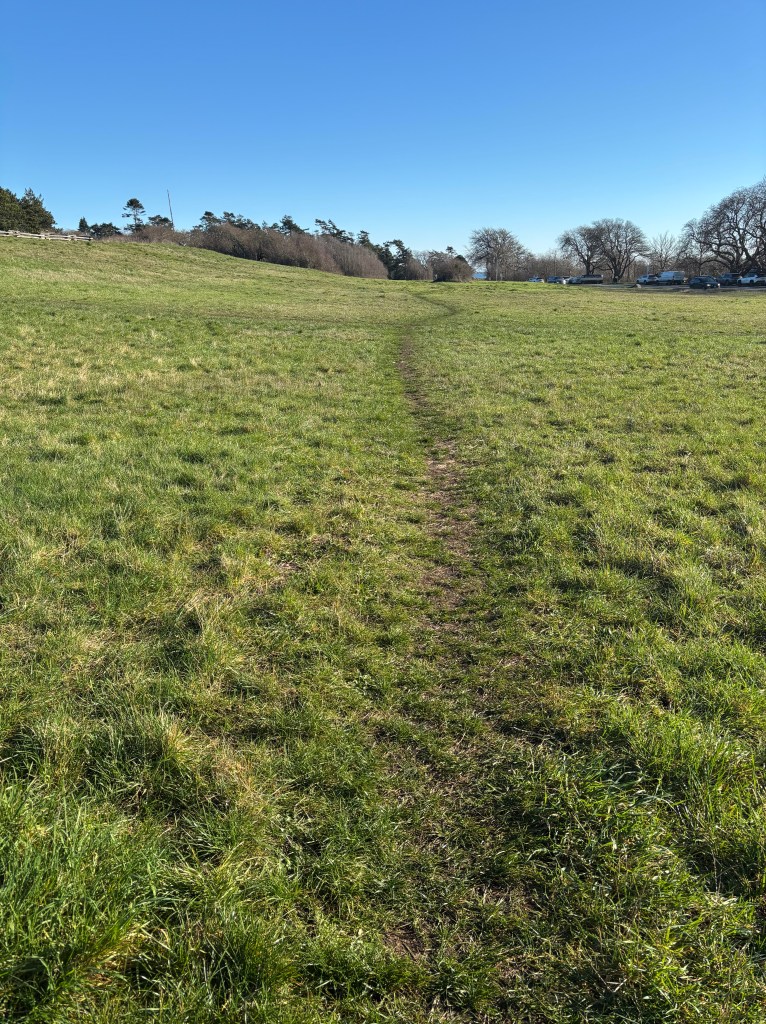
Your brain builds neural pathways like garden paths. The thoughts you repeat are the ones you “walk” most often. Over time, those paths become smooth and automatic. For better or for worse.
Because your brain’s job is to keep you safe, it takes your repeated thoughts as truth, so whatever you tell it often enough, it starts to believe and look for proof.
When you start choosing new, healing thoughts, you’re simply walking a new path. With practice, your brain learns to follow it naturally.
One morning I woke up thinking ‘I don’t think I can get out of bed today.’ So I didn’t. I spent 14 hours scrolling my iPad, feeling like a burden, spiraling into anxiety about the future. The next morning, before my brain could start its doom loop, I thought ‘What’s one small thing I can do?’ I watered the plants. That was it. But I wasn’t in bed all day.
When I worried that people thought I was faking because I could walk, or that I wasn’t ‘sick enough’ to be on disability, the vertigo would kick in and my ears would ring. Not exactly at that moment, it took some reflection to realize the connection, but the symptoms weren’t just random examples of my body betraying me. It was a self-fulfilling prophecy in action.
Staring at my garden one day, trying to squash the overwhelm at the weeding and pruning calling to me through the fatigue, I watched the hummingbirds flit from one buddleia to another. I envied their boundless energy and wished I could breathe it in.
Then I wondered what it would be like to be an animal and not have the overthinking, negative-biased human brain. That flipped the switch, and I thought, “What if I shift my perspective?”
Adjusting the lens of how I looked at things, from “I’m so sick and tired of being sick and tired” to “What can I do to help myself heal?” was the game-changing move that stopped the carousel of terror and started a true healing path.
These days, when I catch myself thinking ‘I’ll never…’, I pause. Sometimes I can shift it immediately: ‘Not never. Just not today.’ Sometimes I can’t, and that’s okay too.
That garden I was standing in when I first said those six words? I learned to tend it in a different way. Some days with energy, some days from a chair, sometimes just watching the hummingbirds from the window. But I was no longer terrified of the growth, because I was part of it.
The prison was never MS. It was the story I told myself about MS. And I’m the one who holds the key.
What six words have you been saying to yourself? Write them down. Just notice them. That’s where the door starts to open.




 Walk a Myelin My Shoes