
chronic illness, healing, life, MS

Permission to Rest: Letting Go of Guilt and the Burden Myth

Why do we feel like we have to earn the right to breathe?

One of the biggest struggles I had after diagnosis was letting myself rest without the constant inner soundtrack of “I should do more, I’m being lazy, Why can’t I just push through?” It was crazy making.

This struggle to rest without guilt is not unique to the chronic illness community, it’s a cultural epidemic.

How We Got Here: Productivity=Worth

From the time we’re children, we’re conditioned to tie our value to our productivity. It’s how the capitalist wheels keep turning.

This is reinforced constantly through media, marketing, and cultural attitudes. We didn’t realize it was happening, it’s just the way things are.

So everyone within the system is wired to believe that resting is selfish, lazy, or a sign that you’re a failure.

The Gender Layer

Generations of women have been proving their worth through domestic labour while the men had the “important” job of earning money.

Despite women now entering the workforce equally, the scales haven’t balanced.

Women are still managing most of the thousands of details that go into running a home and raising children. A lot of it is the invisible labour of managing birthdays, extended families, school activities, medical appointments, grocery lists, etc, etc, etc.

We take it on because we feel that it won’t get done otherwise. Often that’s true.

Husbands don’t think about it because they’re watching the football game, out on the golf course, or snacking on cheesies on the couch you just vacuumed.

This isn’t to bash on the husbands (okay, maybe a little), or to glorify the ability of women to multitask (though we do kick ass), but it is the way our society is set up.

What is the cost? Women make up 80% of autoimmune diseases. Our bodies are literally screaming at us, and often we don’t listen until they conk out completely. Ask me how I know.

We’re conditioned to abandon our own needs to act in the service of others from the time we’re tiny. We’re raised to be good daughters, nice friends, perfect mothers. Taking five minutes to think about our own needs means we’re being selfish.

When Chronic Illness Forces the Issue

When this plays out in the context of chronic illness, where you simply can’t fulfill the all the functions you used to push yourself through, you feel guilty. Then guilt turns to shame. And you feel like a burden.

Shifting gears and stepping off the hamster wheel of capitalism is a blow to the ego. It takes some serious recalibration of your mindset.

The guilt doesn’t just switch off. We can rewrite the script though.

Reclaiming Your Inherent Worth

We all need to claim a new role, women and men alike.

Women don’t have value because they clean the house and cook dinner and hold down a full-time job.

Men don’t have value because they bring home a paycheque and know how to fix the lawnmower.

Every single human on the planet has value and worth just because they’re here. Period. Full stop.

Nothing needs to be proven or earned, it’s just a fact. You have value because you are.

You matter, your needs matter, and we all need to rest.

What Real Rest Actually Looks Like

Binging three seasons of Shrinking, or scrolling Instagram for two hours is not rest.

Neither is folding laundry while chatting to your best friend.

True rest is stilling your body and letting your mind wander.

Stare out a window, watch the leaves dance in the trees. Stare at your toes and daydream.

Five minutes a day can make a huge difference.

It takes practice. Your mind will want to go over your to-do list, or snark at you that you’re lazy.

Claim your time. Fight for it. It’s an investment in yourself that will pay off 1000x in the future.

If you want to read more about the necessity of resting, check out this article in Psychology Today.

Rest is not a reward for finishing everything. As if that’s even possible.

Resting is your superpower.

Rest. You deserve it.

❤️ Amanda

chronic illness, healing, Health, MS

Compound Healing: How Small Daily Habits Multiply Your Health

I was on my morning walk yesterday, headphones in, half-listening to a financial podcast, something I never imagined myself doing. But here we are. When you find yourself single after thirty years, you do a lot of things you never imagined.

The podcast was by investing ninja Kristen Wonch, and she was explaining compound interest using the most relatable analogy I’ve ever heard: a rumour in high school.

Picture it. One person whispers something deliciously scandalous to two people. Those two people each tell two more. And so on and so on. After just 20 days? Two million people know that story.

But here’s where it gets wild. If that first person had told just three people instead of two, and each of those people told three, and so on, after 20 days, the number doesn’t climb to three million. It doesn’t even double.

It goes to 15 billion.

Let that sink in. One extra person. Compounded over time. An almost incomprehensible difference.

And that’s when it hit me. What if the thing spreading wasn’t gossip, but your healing?

When Everything Changed at Once

When my marriage ended after three decades, the fear that moved in alongside the grief wasn’t just emotional. It was financial. It was existential. It was: what does the rest of my life actually look like?

I did what I do. I researched. I listened to podcasts on my walks. I read everything I could get my hands on. And somewhere in that process of trying to figure out how to create financial stability, I started realizing that everything I was learning about financial habits applied, sometimes perfectly, to my health.

Because the truth is, both had been on autopilot for a long time. And autopilot, as it turns out, is not a strategy.

Tiny Habits Are Compound Interest for Your Health

I used to ask myself, in the slightly sarcastic voice I reserve for things I suspect are too good to be true: How much difference can it actually make to spend five minutes outside first thing in the morning? What does five minutes of meditation really do?

The answer, it turns out, is an insurmountable difference. Just not overnight.

Unlike the rumour mill, which spreads fast and furious and usually ends in someone crying in a bathroom, the compounding of healthy habits happens slowly. Quietly. Through tiny shifts that you almost don’t notice until one day you do.

A five-minute walk becomes a twenty-minute walk. The morning air clears your head enough that you sleep better. You sleep better so you have a little more energy. A little more energy means you feel like cooking instead of ordering in. Better food means your body feels different. Your body feeling different means you actually want to move it. And on it goes.

Each habit creates the conditions for the next one. That’s the flywheel. That’s the compound interest. The return on investment isn’t obvious at first, but it’s absolutely, undeniably real.

The Titanic and the 1% Shift

I’ve been thinking about the Titanic a lot lately. Bear with me.

That ship did not sink because of the iceberg, exactly. It sank because by the time the iceberg was a problem, the ship was already committed to its course. I’m speculating here, obviously, but I imagine the thinking was something like: well, this thing is too massive to turn, so let’s just keep going and hope for the best.

We all know how that ended.

But what if the captain had started a 1% course correction the moment he first heard about the ice? What if the adjustment had been small enough to feel almost pointless, but consistent, and early?

The tragedy might have been entirely averted.

We’re all captains of our own ships. And most of us, at some point, have had an iceberg on the horizon that we kept sailing toward because change felt too big, too slow, too hard to bother with. I’ll start Monday. I’ll start in January. I’ll start when things calm down.

The thing is, the ship’s already moving. You might as well start turning.

From Hindsight to Foresight

Here’s something I’ve made peace with recently: I wish I’d started investing in my twenties. My dad told me to. I didn’t listen. It was too complicated. I didn’t have the ‘extra’ money. All the usual excuses. Now that I understand how compound interest works, I can see exactly what that cost me.

For a while, that knowledge felt like punishment. Like proof that I had done life wrong.

But I’ve stopped doing that. Because beating yourself up about what you didn’t start ten years ago is the opposite of useful. It’s actually just another version of the Titanic problem, staying committed to a course that isn’t working because changing it feels too late.

It’s not too late. It’s never too late. And here’s the reframe that changed everything for me:

Instead of looking back at the last ten years with regret, and ‘shoulding’ all over myself, I use the power of foresight to look forward at the next ten. Where do I want to be? What does that person look like? And what’s the smallest, most manageable 1% shift I can make today to start becoming her?

True with money. True with health. Always.

Nobody Is Coming With a Life Raft

I want to say something that might sting a little, but I mean it with love.

Nobody is coming to save you.

Not a doctor who hands you a magic prescription. Not a diet that fixes everything in thirty days. Not a wellness trend, a detox, or a supplement. The life raft is not coming because you’re not drowning. You’re swimming. And you’re more capable than you’ve been led to believe.

You have a tremendous amount of control over your own health. More than the healthcare system tends to tell you. More than you might feel right now, especially if you’re in the middle of something hard. Even MS.

It doesn’t matter what habit you start with. It only matters that you do. Five minutes outside. One glass of water before your coffee. A single deep breath before you look at your phone in the morning. Something so small it almost feels silly.

Start there. Let it compound.

The Best Investment You’ll Ever Make. And It’s Free.

Financial security is important. I won’t pretend otherwise, I spent enough sleepless nights worrying about it to know that money stress is real and it’s heavy.

But there’s no better investment than your health. Not one. Because without it, nothing else works. Not the retirement fund, not the dream trip, not the relationship or the career or the creative project you keep putting off.

And my favourite part of this whole analogy? Most of the habits that change your life the most are completely, entirely free.

Sleep. Movement. Sunlight. Water. Stillness. Connection. Breathing. These are not luxuries. They’re the compound interest machine, and you already own it.

So I’ll leave you with the question I keep asking myself:

Where could you be in ten years if you add one tiny habit today?

The rumour has to start somewhere. Let it start with you.

❤️Amanda

Five minutes in nature compounds to a calm nervous system
chronic illness, gratitude, healing, Health, life, mental health, MS

Life Only Goes in One Direction 

 When I was young, way back in the olden days, I was in such a hurry to grow up. As a tween, a phrase that didn’t even exist in the 1980s, I wanted to make my own decisions, eat lots of junk food and stay up as late as I wanted. As a 15 year old, I thought it was very adult to be going to the bar, doing tequila shots and dancing on the speakers. Yikes! The sweet absurdity of being in such a hurry to become someone older.

When my kids were little, I often reminded them that life only goes in one direction, so don’t be in a hurry to grow up. Then I was diagnosed with MS, and I found myself wanting to go back to the before: before I got sick, before my kids had to worry about having a sick mother, before I had to give up my job. I was wishing for a time machine when that phrase popped back into my head. Talk about irony.

It was from my experience as a misguided youth that I gained the wisdom to pass that phrase on to my children, to encourage them to slow down and not wish away their childhood. Yet, there I was, newly diagnosed, desperately wishing there was a rewind button for life. How easy it is to dispense retrospective wisdom, not knowing how much you’ll need it one day yourself.

With the diagnosis, everything I thought I knew about moving forward got turned inside out. MS took not just my health, but the sweet oblivion of how precarious health can be. The luxury of not constantly thinking and worrying about my body. The career I loved, teaching 6 year olds to read, count and sing in French. The before and after line that changed everything and left me with the desperate, completely human wish to go backwards.

When the phrase popped back into my head, at first it felt cruel, like a mockery of the bleak future promised by the neurologist. Life only goes in direction. The doors to reclaim my health locked from the other side. The crushing grief of accepting there is no before to return to.

It took years to move through that resistance to something like peace. I’d hear people say “my illness has been a blessing’, and think they were completely unhinged. Slowly, reluctantly, I started to understand what they meant. There’s a clarity that comes from being forced to stop. From learning to be a human being instead of a human doing. 

The brutal, beautiful truth is that suffering is one of life’s most effective teachers. The things that MS has given me that nothing else could: presence, gratitude and a recalibrated sense of what matters. Not a silver lining so much as a different kind of light.

Something you can try this week: Spend five minutes with the “before”. Let yourself miss it and feel the grief. Then consciously close that door and ask, “what is available to me today?” You don’t have to feel grateful yet, just curious.

❤️ Amanda

” A tree doesn’t regret losing its leaves because it knows it’s time to shed them for a new, beautiful life.”

chronic illness, MS

Lego Habits for Healing

Not gonna lie, I feel like shit.

Headache, nausea, fatigue like someone Dyson’d out my energy, body aching like I’ve been attacked with a meat tenderizer. It’s my own Hundred Year Flu.

Okay. It’s only been a few months. The winter months, which seems to be my pattern.

The slow decline of energy in November. The push through December, distracted by my favourite holiday. The anticipation of a new year keeping hope alive, with a few good days thrown in to trick me. And then… February.

It would be easy to feel defeated. That even after all my hard work, and careful, deliberate living, I’m back in the same place. 

Except it’s not the same, just similar. 

When I think back to my first few years after diagnosis, vertigo making it hard to walk, ears ringing constantly, my brain doing acrobatics that felt like my skull was doing the wave, eyeballs swirling, swallowed by depression and anxiety, the electric shocks, the list goes on.

Now I just feel like shit. It’s an improvement. And that gives me hope.

This is when all the work I’ve done building healing habits: mindset, nervous system regulation, sleep hygiene, nutrition and movement, keeps me afloat.

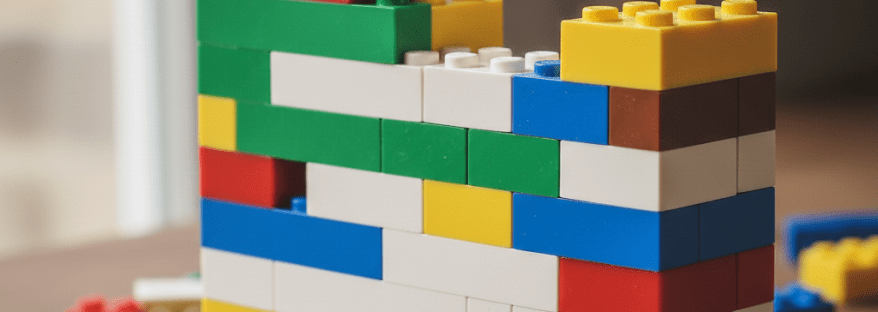
Habits are like Lego pieces

Some of my favourite memories with my son are working together to build the increasingly complex Lego kits over the years. Step by step, piece by piece, we created most of the Star Wars kits available at the time. The look on his face and the sense of accomplishment as he placed the final piece still warms my mother’s heart.

Healing is not a kit, there is no final piece. It’s an ongoing process that never ends until you take your last breath. That’s true for all humans, not just those dealing with chronic illness. 

But every piece you add to your routine builds the structure of your healing journey. You have to go slowly, to make sure that piece is secure before you add a new piece. But, unlike a Lego kit, it doesn’t matter what order you add the pieces, just that you do.

Mindset is the Instruction Manual

The reason I’ve been focussing on mindset, inner dialogue and self-compassion in my Blog 2.0 posts, is that it’s really the equivalent of the Lego manual.

Yes, you can add pieces in whichever order works best for you. But if you’re telling yourself, ‘Well, I’ll try it but I don’t believe it will work’, or your deep belief is ‘they said it’s incurable so why bother’, or when you get off track your inner voice says ‘you’re useless, I knew you couldn’t do it’, then you’re essentially taking away pieces faster than you can add them.

Mindset is the manual and the foundation. So if you’re whirling in the confusion of information overload, start with building a positive mindset. It can be as simple as mindful breathing. Or saying ‘good morning beautiful’ into the mirror every morning.

Healing is possible. Your habits will get you there.

❤️ Amanda

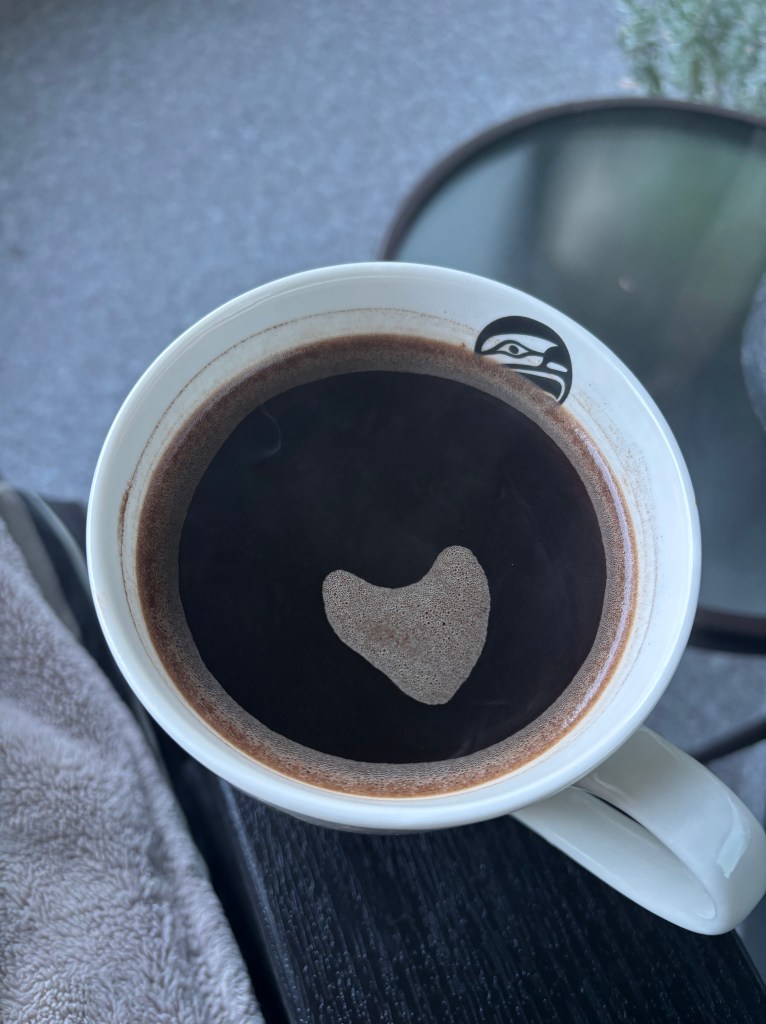
Coffee and contemplation every morning, one of my favourite habits

chronic illness, healing, mental health, MS

The 7 Phrases That Spike MS Symptoms (And What to Say Instead)

Wednesday morning.

 Brain fog so thick I couldn’t remember my daughter’s teacher’s name. 

My first thought: ‘My body is attacking itself.’

My second thought: ‘What if that phrase is making everything worse?’

So I decided to test it.

When I started saying ‘My body’s trying to get my attention’ instead of ‘My body is attacking itself,’ something shifted.

I stopped feeling like I was in a war.

I started getting curious. ‘What is it trying to tell me?’

I noticed a pattern. Every time I spiraled into ‘This is just going to get worse,’ my fatigue would spike within hours. 

Not because the disease got worse, because my nervous system did.

7 Most Common, Least Helpful Phrases, Reframed

1. “I’ll never be the same again” → “I’m becoming someone new”

2. “My body is attacking itself” → “My body needs guidance to heal”

3. “I can’t trust my body anymore” → “My body’s trying to get my attention”

4. “I’m a burden to everyone” → “I’m worthy of support and love”

5. “This is just going to get worse” → “No one knows what the future holds”

6. “I should be able to handle this” → “This is hard, and I’m doing my best”

7. “If I just try harder, I can beat this” → “Healing requires patience, not force”

Why This Matters (More Than I Realized)

I used to think my thoughts were just… thoughts. Turns out, every time I told myself “I’m a burden” or “This is just going to get worse,” my body was listening. And responding.

These phrases flip on the stress response, the same system that would kick in if I were being chased by a bear. Except there’s no bear. Just me, sitting on my couch, flooding my nervous system with panic.

And stress? MS loves stress. It’s like pouring gasoline on inflammation. Within hours of a spiral, I’d feel it. Heavier fatigue, sharper pain, brain fog so thick I’d lose words mid-sentence.

Something finally clicked for me. My body can’t heal when it thinks it’s under attack. 

Healing happens in safety. In calm. When my nervous system can actually exhale.

Why I’m Not Pushing Positivity

I tried the “think positive!” approach. It felt fake. My brain knew I didn’t believe “Everything is amazing!” when I could barely get out of bed. The forced optimism just added another layer of failure.

That’s when I learned about neutral reframing. You’re not pretending everything’s fine, you’re just offering your brain a different pathway. A gentler one.

Every time you choose the reframe over the catastrophe, you’re literally building new neural connections. With repetition, those new pathways get stronger. The old ones fade. Not instantly. But gradually. Like training a muscle.

Want to Try This With Me?

Pick the phrase that shows up most for you, the one that feels automatic, like a reflex.

Write your reframe on a sticky note. I have one on my bathroom mirror, and one on my coffee maker, because apparently I need the reminder before caffeine.

When you catch the old phrase creeping in, pause. Read the reframe. Say it out loud if you can. You don’t have to believe it fully yet. You just have to practice offering it as an option.

That’s it. One phrase. One week. Let’s see what shifts.

❤️ Amanda