
Health, MS, chronic illness, healing

Compound Healing: How Small Daily Habits Multiply Your Health

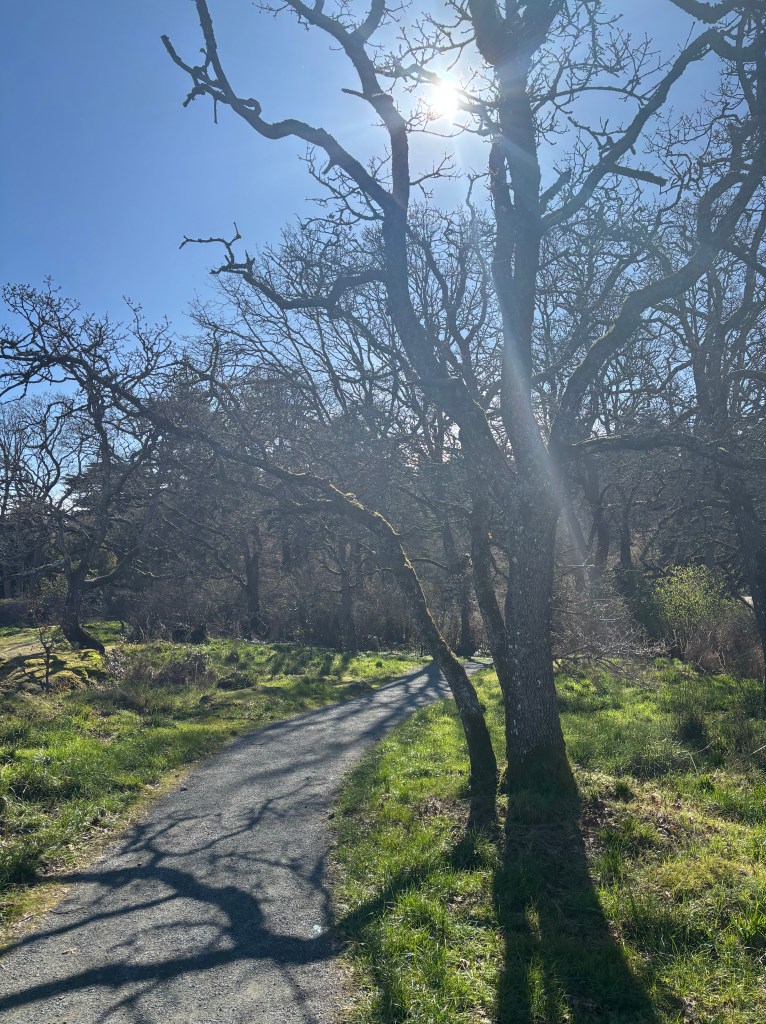
I was on my morning walk yesterday, headphones in, half-listening to a financial podcast, something I never imagined myself doing. But here we are. When you find yourself single after thirty years, you do a lot of things you never imagined.

The podcast was by investing ninja Kristen Wonch, and she was explaining compound interest using the most relatable analogy I’ve ever heard: a rumour in high school.

Picture it. One person whispers something deliciously scandalous to two people. Those two people each tell two more. And so on and so on. After just 20 days? Two million people know that story.

But here’s where it gets wild. If that first person had told just three people instead of two, and each of those people told three, and so on, after 20 days, the number doesn’t climb to three million. It doesn’t even double.

It goes to 15 billion.

Let that sink in. One extra person. Compounded over time. An almost incomprehensible difference.

And that’s when it hit me. What if the thing spreading wasn’t gossip, but your healing?

When Everything Changed at Once

When my marriage ended after three decades, the fear that moved in alongside the grief wasn’t just emotional. It was financial. It was existential. It was: what does the rest of my life actually look like?

I did what I do. I researched. I listened to podcasts on my walks. I read everything I could get my hands on. And somewhere in that process of trying to figure out how to create financial stability, I started realizing that everything I was learning about financial habits applied, sometimes perfectly, to my health.

Because the truth is, both had been on autopilot for a long time. And autopilot, as it turns out, is not a strategy.

Tiny Habits Are Compound Interest for Your Health

I used to ask myself, in the slightly sarcastic voice I reserve for things I suspect are too good to be true: How much difference can it actually make to spend five minutes outside first thing in the morning? What does five minutes of meditation really do?

The answer, it turns out, is an insurmountable difference. Just not overnight.

Unlike the rumour mill, which spreads fast and furious and usually ends in someone crying in a bathroom, the compounding of healthy habits happens slowly. Quietly. Through tiny shifts that you almost don’t notice until one day you do.

A five-minute walk becomes a twenty-minute walk. The morning air clears your head enough that you sleep better. You sleep better so you have a little more energy. A little more energy means you feel like cooking instead of ordering in. Better food means your body feels different. Your body feeling different means you actually want to move it. And on it goes.

Each habit creates the conditions for the next one. That’s the flywheel. That’s the compound interest. The return on investment isn’t obvious at first, but it’s absolutely, undeniably real.

The Titanic and the 1% Shift

I’ve been thinking about the Titanic a lot lately. Bear with me.

That ship did not sink because of the iceberg, exactly. It sank because by the time the iceberg was a problem, the ship was already committed to its course. I’m speculating here, obviously, but I imagine the thinking was something like: well, this thing is too massive to turn, so let’s just keep going and hope for the best.

We all know how that ended.

But what if the captain had started a 1% course correction the moment he first heard about the ice? What if the adjustment had been small enough to feel almost pointless, but consistent, and early?

The tragedy might have been entirely averted.

We’re all captains of our own ships. And most of us, at some point, have had an iceberg on the horizon that we kept sailing toward because change felt too big, too slow, too hard to bother with. I’ll start Monday. I’ll start in January. I’ll start when things calm down.

The thing is, the ship’s already moving. You might as well start turning.

From Hindsight to Foresight

Here’s something I’ve made peace with recently: I wish I’d started investing in my twenties. My dad told me to. I didn’t listen. It was too complicated. I didn’t have the ‘extra’ money. All the usual excuses. Now that I understand how compound interest works, I can see exactly what that cost me.

For a while, that knowledge felt like punishment. Like proof that I had done life wrong.

But I’ve stopped doing that. Because beating yourself up about what you didn’t start ten years ago is the opposite of useful. It’s actually just another version of the Titanic problem, staying committed to a course that isn’t working because changing it feels too late.

It’s not too late. It’s never too late. And here’s the reframe that changed everything for me:

Instead of looking back at the last ten years with regret, and ‘shoulding’ all over myself, I use the power of foresight to look forward at the next ten. Where do I want to be? What does that person look like? And what’s the smallest, most manageable 1% shift I can make today to start becoming her?

True with money. True with health. Always.

Nobody Is Coming With a Life Raft

I want to say something that might sting a little, but I mean it with love.

Nobody is coming to save you.

Not a doctor who hands you a magic prescription. Not a diet that fixes everything in thirty days. Not a wellness trend, a detox, or a supplement. The life raft is not coming because you’re not drowning. You’re swimming. And you’re more capable than you’ve been led to believe.

You have a tremendous amount of control over your own health. More than the healthcare system tends to tell you. More than you might feel right now, especially if you’re in the middle of something hard. Even MS.

It doesn’t matter what habit you start with. It only matters that you do. Five minutes outside. One glass of water before your coffee. A single deep breath before you look at your phone in the morning. Something so small it almost feels silly.

Start there. Let it compound.

The Best Investment You’ll Ever Make. And It’s Free.

Financial security is important. I won’t pretend otherwise, I spent enough sleepless nights worrying about it to know that money stress is real and it’s heavy.

But there’s no better investment than your health. Not one. Because without it, nothing else works. Not the retirement fund, not the dream trip, not the relationship or the career or the creative project you keep putting off.

And my favourite part of this whole analogy? Most of the habits that change your life the most are completely, entirely free.

Sleep. Movement. Sunlight. Water. Stillness. Connection. Breathing. These are not luxuries. They’re the compound interest machine, and you already own it.

So I’ll leave you with the question I keep asking myself:

Where could you be in ten years if you add one tiny habit today?

The rumour has to start somewhere. Let it start with you.

❤️Amanda

Five minutes in nature compounds to a calm nervous system
chronic illness, gratitude, healing, Health, life, mental health, MS

Life Only Goes in One Direction 

 When I was young, way back in the olden days, I was in such a hurry to grow up. As a tween, a phrase that didn’t even exist in the 1980s, I wanted to make my own decisions, eat lots of junk food and stay up as late as I wanted. As a 15 year old, I thought it was very adult to be going to the bar, doing tequila shots and dancing on the speakers. Yikes! The sweet absurdity of being in such a hurry to become someone older.

When my kids were little, I often reminded them that life only goes in one direction, so don’t be in a hurry to grow up. Then I was diagnosed with MS, and I found myself wanting to go back to the before: before I got sick, before my kids had to worry about having a sick mother, before I had to give up my job. I was wishing for a time machine when that phrase popped back into my head. Talk about irony.

It was from my experience as a misguided youth that I gained the wisdom to pass that phrase on to my children, to encourage them to slow down and not wish away their childhood. Yet, there I was, newly diagnosed, desperately wishing there was a rewind button for life. How easy it is to dispense retrospective wisdom, not knowing how much you’ll need it one day yourself.

With the diagnosis, everything I thought I knew about moving forward got turned inside out. MS took not just my health, but the sweet oblivion of how precarious health can be. The luxury of not constantly thinking and worrying about my body. The career I loved, teaching 6 year olds to read, count and sing in French. The before and after line that changed everything and left me with the desperate, completely human wish to go backwards.

When the phrase popped back into my head, at first it felt cruel, like a mockery of the bleak future promised by the neurologist. Life only goes in direction. The doors to reclaim my health locked from the other side. The crushing grief of accepting there is no before to return to.

It took years to move through that resistance to something like peace. I’d hear people say “my illness has been a blessing’, and think they were completely unhinged. Slowly, reluctantly, I started to understand what they meant. There’s a clarity that comes from being forced to stop. From learning to be a human being instead of a human doing. 

The brutal, beautiful truth is that suffering is one of life’s most effective teachers. The things that MS has given me that nothing else could: presence, gratitude and a recalibrated sense of what matters. Not a silver lining so much as a different kind of light.

Something you can try this week: Spend five minutes with the “before”. Let yourself miss it and feel the grief. Then consciously close that door and ask, “what is available to me today?” You don’t have to feel grateful yet, just curious.

❤️ Amanda

” A tree doesn’t regret losing its leaves because it knows it’s time to shed them for a new, beautiful life.”

chronic illness, healing, mental health, MS

The 7 Phrases That Spike MS Symptoms (And What to Say Instead)

Wednesday morning.

 Brain fog so thick I couldn’t remember my daughter’s teacher’s name. 

My first thought: ‘My body is attacking itself.’

My second thought: ‘What if that phrase is making everything worse?’

So I decided to test it.

When I started saying ‘My body’s trying to get my attention’ instead of ‘My body is attacking itself,’ something shifted.

I stopped feeling like I was in a war.

I started getting curious. ‘What is it trying to tell me?’

I noticed a pattern. Every time I spiraled into ‘This is just going to get worse,’ my fatigue would spike within hours. 

Not because the disease got worse, because my nervous system did.

7 Most Common, Least Helpful Phrases, Reframed

1. “I’ll never be the same again” → “I’m becoming someone new”

2. “My body is attacking itself” → “My body needs guidance to heal”

3. “I can’t trust my body anymore” → “My body’s trying to get my attention”

4. “I’m a burden to everyone” → “I’m worthy of support and love”

5. “This is just going to get worse” → “No one knows what the future holds”

6. “I should be able to handle this” → “This is hard, and I’m doing my best”

7. “If I just try harder, I can beat this” → “Healing requires patience, not force”

Why This Matters (More Than I Realized)

I used to think my thoughts were just… thoughts. Turns out, every time I told myself “I’m a burden” or “This is just going to get worse,” my body was listening. And responding.

These phrases flip on the stress response, the same system that would kick in if I were being chased by a bear. Except there’s no bear. Just me, sitting on my couch, flooding my nervous system with panic.

And stress? MS loves stress. It’s like pouring gasoline on inflammation. Within hours of a spiral, I’d feel it. Heavier fatigue, sharper pain, brain fog so thick I’d lose words mid-sentence.

Something finally clicked for me. My body can’t heal when it thinks it’s under attack. 

Healing happens in safety. In calm. When my nervous system can actually exhale.

Why I’m Not Pushing Positivity

I tried the “think positive!” approach. It felt fake. My brain knew I didn’t believe “Everything is amazing!” when I could barely get out of bed. The forced optimism just added another layer of failure.

That’s when I learned about neutral reframing. You’re not pretending everything’s fine, you’re just offering your brain a different pathway. A gentler one.

Every time you choose the reframe over the catastrophe, you’re literally building new neural connections. With repetition, those new pathways get stronger. The old ones fade. Not instantly. But gradually. Like training a muscle.

Want to Try This With Me?

Pick the phrase that shows up most for you, the one that feels automatic, like a reflex.

Write your reframe on a sticky note. I have one on my bathroom mirror, and one on my coffee maker, because apparently I need the reminder before caffeine.

When you catch the old phrase creeping in, pause. Read the reframe. Say it out loud if you can. You don’t have to believe it fully yet. You just have to practice offering it as an option.

That’s it. One phrase. One week. Let’s see what shifts.

❤️ Amanda

chronic illness, healing, Health, mental health, MS

The 6 Words That Became My Prison

‘I’ll never be the same again.’ I said those six words three weeks after my MS diagnosis, not knowing I was building a prison.

The moment I first said those words, I was trying to feel excited about all the growth in my garden. Instead, I was terrified and overwhelmed with all the work that growth was making for me. 

My body felt like I’d been squeezed through a pasta maker and dragged behind a pickup. I couldn’t find the energetic, motivated person I’d always thought myself to be. (I’d actually always struggled with fatigue but I had a close personal relationship with Denial.)

I repeated variations of that sentence daily for 3 years, swirling in the fog of confusion and grief a life-changing diagnosis brings.

Saying ‘I have MS’ is just a fact. But it’s the way I said it, with defeat, with finality, like it was my entire identity. That’s what kept me stuck. There’s a difference between ‘I have MS’ and ‘I AM sick.’


Your brain builds neural pathways like garden paths. The thoughts you repeat are the ones you “walk” most often. Over time, those paths become smooth and automatic. For better or for worse.

Because your brain’s job is to keep you safe, it takes your repeated thoughts as truth, so whatever you tell it often enough, it starts to believe and look for proof.

When you start choosing new, healing thoughts, you’re simply walking a new path. With practice, your brain learns to follow it naturally.

One morning I woke up thinking ‘I don’t think I can get out of bed today.’ So I didn’t. I spent 14 hours scrolling my iPad, feeling like a burden, spiraling into anxiety about the future. The next morning, before my brain could start its doom loop, I thought ‘What’s one small thing I can do?’ I watered the plants. That was it. But I wasn’t in bed all day.

When I worried that people thought I was faking because I could walk, or that I wasn’t ‘sick enough’ to be on disability, the vertigo would kick in and my ears would ring. Not exactly at that moment, it took some reflection to realize the connection, but the symptoms weren’t just random examples of my body betraying me. It was a self-fulfilling prophecy in action.

Staring at my garden one day, trying to squash the overwhelm at the weeding and pruning calling to me through the fatigue, I watched the hummingbirds flit from one buddleia to another. I envied their boundless energy and wished I could breathe it in.

Then I wondered what it would be like to be an animal and not have the overthinking, negative-biased human brain. That flipped the switch, and I thought, “What if I shift my perspective?” 

Adjusting the lens of how I looked at things, from “I’m so sick and tired of being sick and tired” to “What can I do to help myself heal?” was the game-changing move that stopped the carousel of terror and started a true healing path.

These days, when I catch myself thinking ‘I’ll never…’, I pause. Sometimes I can shift it immediately: ‘Not never. Just not today.’ Sometimes I can’t, and that’s okay too.

That garden I was standing in when I first said those six words? I learned to tend it in a different way. Some days with energy, some days from a chair, sometimes just watching the hummingbirds from the window. But I was no longer terrified of the growth, because I was part of it.

The prison was never MS. It was the story I told myself about MS. And I’m the one who holds the key.

What six words have you been saying to yourself? Write them down. Just notice them. That’s where the door starts to open.

❤️Amanda

What path are you creating with your thoughts?
chronic illness, healing, MS

Finding Hope in MS: 2 Healing Tips

Remember that feeling when you first heard ‘MS’? Like someone just handed you a puzzle with no picture, half the pieces missing and said ‘good luck!’

The overwhelm is real. Medication, or not? Can I still work? How do I tell people? Will I end up in a wheelchair? And on and on. The carousel of terror you never signed up for.

 My 23 year diagnostic odyssey ended with a neurologist saying, “Based on your MRI and history, you have MS. Take these (handing me a 10 pound stack of pharmaceutical information) and pick one.” That was the first time I understood the impulse to throat punch someone.

Here’s what I wish someone had whispered in my ear during those early, scary days. “MS isn’t the end of your story, and it’s not your identity.”

Here are 2 simple things that brought me back from the edge. Healing isn’t easy, but it is simple.

2 Game-Changing Tips

Tip #1: Why I Talk to Trees Now

In the early days, when it was hard to even get out of bed, the thought of going outside was as appealing as a quick hike up Mount Everest.

Eventually I dragged my butt out the back door and sat in a chair, staring at the garden. It felt like punishment. At first.

Watching the birds fly overhead, the leaves dance in the breeze and the flowers slowly open their faces to the sun, woke something up in me. Something that became a major ingredient in my healing journey.

The more time I spent outside, the better I felt. Something about just being there started restoring my energy.

Barefoot in the grass or on a beach, sitting under trees. On cold, rainy days, even staring at houseplants.

Sometimes sitting in my car at the beach or a park with the window open.

When all else failed, on ‘bed days’, I’d search “nature meditation“ on YouTube. Tim Janis is a great channel and doesn’t get interrupted by ads.

Trees don’t judge if you cry at them. Trust me, I’ve tested this. Those tree huggers are on to something. I wrap my arms around a tree and whisper my thoughts. Call me crazy, but the tree whispers back. And my nervous system downshifts and relaxes.

Actionable step: Aim for 5 minutes outside daily.

First thing in the morning is best and will improve your sleep. More time is obviously better, but doing it daily is the most important.

Start small so you can achieve it every single day. That’s how you make progress.

Tip #2: The Vertigo Solution I Didn’t Believe Would Work

Stress is the mortal enemy of MS. Living with MS is very stressful. It’s a vicious cycle.

MS stress amplifies everything. Things that wouldn’t have bothered you before, pluck those stress strings and have you vibrating (literally) with unwelcome negative energy.

How do you take back control? You pay attention to a process your body does automatically, adjust it and use it to your advantage.

In my last post, I talked about baby belly breathing. You’re born with the ability to breathe deeply and oxygenate your body properly. As you grow and get exposed to the inevitable stress of being human, you lose that ability.

Early on, I struggled a lot with vertigo and light-headedness. It’s like living in a fun house, minus the fun. When I learned to breathe properly and added specific breathing techniques, the vertigo loosened its hold over time and I stepped out of the fun house.

Actionable step: 4-7-8 breathing

  • One hand on your belly
  • Inhale through your nose for 4 counts, feel your belly expand
  • Hold for 7 counts
  • Exhale through your nose for 8 counts
  • Repeat for 3-5 rounds

Healing is possible

This is just the beginning of your journey. I know you want to feel better right now. Find that well of patience inside, practice consistently and be kind and compassionate with yourself. I promise you will start to see results.

Last week, I was hugging a tree in the park, releasing some difficult emotions. A woman walked by and winked at me. I walked past her a few minutes later, now she was hugging a tree with a huge smile on her face. What once felt a bit silly, now feels like wisdom.

What’s one small thing you’ll try this week? Let me know in the comments.

You’re not alone.

❤️ Amanda