
chronic illness, gratitude, healing, Health, life, mental health, MS

Life Only Goes in One Direction 

 When I was young, way back in the olden days, I was in such a hurry to grow up. As a tween, a phrase that didn’t even exist in the 1980s, I wanted to make my own decisions, eat lots of junk food and stay up as late as I wanted. As a 15 year old, I thought it was very adult to be going to the bar, doing tequila shots and dancing on the speakers. Yikes! The sweet absurdity of being in such a hurry to become someone older.

When my kids were little, I often reminded them that life only goes in one direction, so don’t be in a hurry to grow up. Then I was diagnosed with MS, and I found myself wanting to go back to the before: before I got sick, before my kids had to worry about having a sick mother, before I had to give up my job. I was wishing for a time machine when that phrase popped back into my head. Talk about irony.

It was from my experience as a misguided youth that I gained the wisdom to pass that phrase on to my children, to encourage them to slow down and not wish away their childhood. Yet, there I was, newly diagnosed, desperately wishing there was a rewind button for life. How easy it is to dispense retrospective wisdom, not knowing how much you’ll need it one day yourself.

With the diagnosis, everything I thought I knew about moving forward got turned inside out. MS took not just my health, but the sweet oblivion of how precarious health can be. The luxury of not constantly thinking and worrying about my body. The career I loved, teaching 6 year olds to read, count and sing in French. The before and after line that changed everything and left me with the desperate, completely human wish to go backwards.

When the phrase popped back into my head, at first it felt cruel, like a mockery of the bleak future promised by the neurologist. Life only goes in direction. The doors to reclaim my health locked from the other side. The crushing grief of accepting there is no before to return to.

It took years to move through that resistance to something like peace. I’d hear people say “my illness has been a blessing’, and think they were completely unhinged. Slowly, reluctantly, I started to understand what they meant. There’s a clarity that comes from being forced to stop. From learning to be a human being instead of a human doing. 

The brutal, beautiful truth is that suffering is one of life’s most effective teachers. The things that MS has given me that nothing else could: presence, gratitude and a recalibrated sense of what matters. Not a silver lining so much as a different kind of light.

Something you can try this week: Spend five minutes with the “before”. Let yourself miss it and feel the grief. Then consciously close that door and ask, “what is available to me today?” You don’t have to feel grateful yet, just curious.

❤️ Amanda

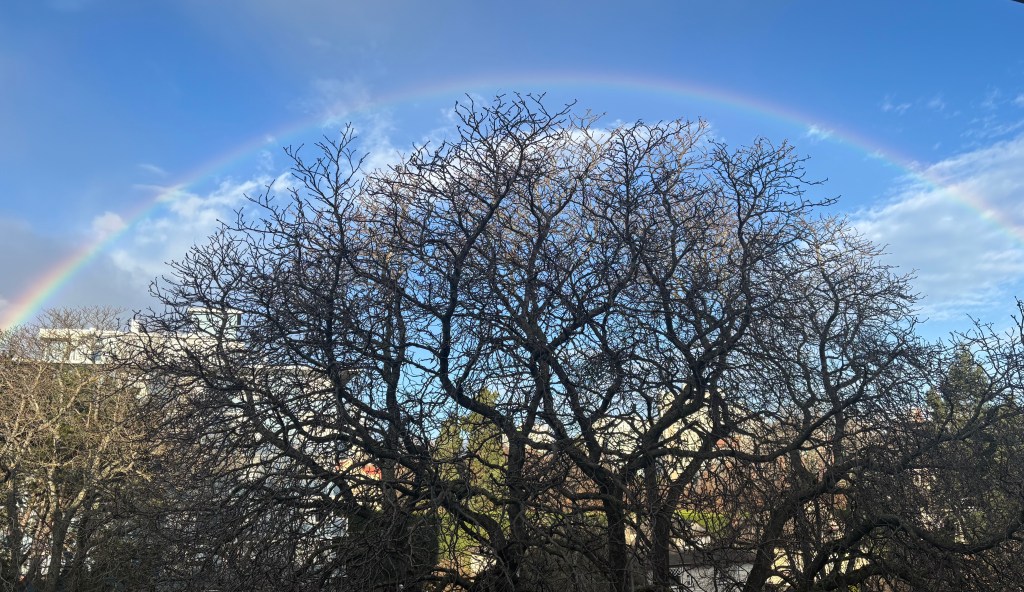
” A tree doesn’t regret losing its leaves because it knows it’s time to shed them for a new, beautiful life.”

chronic illness, gratitude, Health, life, mental health, MS

From Chaos to Calm: Your 3-Minute Reset After MS Diagnosis (or anytime)

Everything just changed. Your mind is spinning.

You want relief. You want answers. You want to feel better now.

After the relief of finally getting my diagnosis, an answer to my 23-year medical mystery tour, the overwhelm took over. My first neurologist handed me the stack of medication information and told me to pick one. Yeah, I fired him.

I didn’t know where to start. So I did what most of us do. I looked for answers everywhere else.

There’s so much information out there. Diets. Protocols. Supplements. Exercise routines. Many people claim to have the one “best” way to handle your life-changing diagnosis.

But here’s what I learned. You’re the only one who can decide what your healing journey looks like. And when you’re caught in a storm of information and emotion, you can’t hear your own wisdom. You need to find ground first.

MS can make you feel powerless. But creating calm, even for three minutes, is something you can do right now.

Here’s your reset:

Set a 3-minute timer.

Place one hand on your heart, the other on your belly.

Take slow breaths into your belly, the way a baby breathes. The way humans breathe naturally before stress teaches us to hold our breath in our chest.

Close your eyes or look at the sky.

Notice one thing you’re grateful for or hopeful about.

That’s it. Do this once today. Nothing more.

This isn’t about fixing everything. It’s about giving your nervous system permission to settle. Because healing can’t happen in chaos.

Do you have a quick reset to share? Let me know in the comments.

I see you. You’ve got this.

❤️ Amanda

Mindset shift: Chaos to calm.
Take 3 minutes to breathe and stare at the sky.

chronic illness, Health, life, mental health, MS

Exercise, the DIY DMT

It’s been a long six and a half years since my MS diagnosis, seven since the relapse that made teaching impossible, but I’ve healed more than I thought possible back in 2015.

I attribute my healing to various things, namely a healthy, stress-free lifestyle, low-dose Naltrexone (LDN), a healthy, mostly vegan diet, circadian fasting (more on that later), time in nature and in my garden, and a great dose of luck that this monster isn’t as aggressive for me as it is for some people.

The biggest factor in the last year though, has been exercise. I thought they were lying. When you barely have enough energy to breathe, how can you possibly exercise? Or, when you do have the energy, you go as hard as the ‘old you’ could manage, then end up in bed for days, useless as braces on a duck.

Much nicer with no braces.
Photo by Skyler Ewing on Pexels.com

So I decided I needed to be methodical about it, and make a commitment to myself to spend half an hour a day using it before I lose it. Never mind MS, age starts gnawing away at the natural strength you used to take for granted and it’s a slippery slope. If I can binge watch Survivor at the end of the day, surely I can carve out half an hour for exercise.

Remember the movie About A Boy? Hugh Grant’s character was a rich layabout who organized his days in thirty minute increments. It became wisdom to me when I was first on disability, and now at least one of those thirty minute chunks is devoted to exercise.

If the weather permits, my exercise is walking outside because it also checks off another important part of my morning routine which is at least 30 minutes of sunlight (or a reasonable facsimile thereof-gray skies are still beautiful). I’m all about efficiency!

Otherwise, I either ride the recumbent bike or do yoga or pilates on YouTube. There are some amazing channels out there, I’ll link a few favourites at the bottom. The trick is, pick the beginner videos. You have nothing to prove except a commitment to consistency.

I know, I know, you used to be able to handle intermediate or advanced, but remember the braces on a duck? While incongruous, it speaks nothing to the true pain you can cause yourself by trying to do too much too fast. Maybe we should picture a tortoise with a headband instead. Since I’ve been limiting myself to gentle but CONSISTENT exercise, I have finally been able to maintain an exercise routine and start to see and feel the benefits.

the tortoise→ MS Warrior

the hand → MS

The tortoise might be caught but he never stops moving!

My newer, all-time favourite paid exercise program, that I do two or three times a week because it always leaves me with a smile on my face, is BodyGroove. With catch phrases like “you can’t do it wrong” and “do whatever feels good for your body”, they have turned exercise into a fun way to connect with your body and dance like it’s 1988.

For each song, they introduce three different rhythms that are simple enough for you to interpret however you want but sooo good for your cognitive health. Check out these articles for all the benefits dance provides.

https://www.news-medical.net/health/Is-Dancing-Good-for-the-Brain.aspx https://www.sciencedirect.com/science/article/abs/pii/S014976341830664X

I’m not affiliated in anyway, I just think it’s a great program for anyone chronically ill, as they have all sorts of people demonstrating and showing how much you can do even sitting down. You don’t need any experience but I grew up dancing in a fairly serious way so I love that I can reconnect with that previous iteration of myself, even on days when the MonSter makes my movements sluggish and difficult.

On my darkest days, stuck in my bed, I dance in my head like I used to as a child. With strength, freedom and passion. Now, even on my mediocre days, I can push myself to do it because “you can’t do it wrong”. You need to move your body, so why not groove your body?

It was my oft-mentioned, well-respected naturopath, Dr Pamela Hutchinson that gave me the idea for the title of this post. Dr Pam believes that exercise should be considered a DMT(disease-modifying therapy), and my neurologist agrees that exercise is the single most important thing you can do to fight MS.

They’re not lying. Move your body, but gently. If you can’t commit to half an hour, commit to five minutes and build up from there. The important thing is to get or keep moving so we don’t lose any more of the mobility and strength that we still have. Fight the fight. You got this!

Top 5 exercises for the chronic illness warrior

  1. Walk – in nature or at least outside
  2. Yoga – Jessica Richburg https://youtu.be/zA5oxYvIx0c – Yoga with Kassandra https://youtu.be/6hZIzMpHl-c – Yoga with Adrienne https://youtu.be/v7AYKMP6rOE
  3. Pilates – Move with Nicole https://youtu.be/NyP_waVgL1w
  4. Recumbent bike – with a nature meditation video https://youtu.be/tck7E11SdR8
  5. Body Groove https://www.bodygroove.com

Amanda ❤️

life, mental health

Learning to Be

The world has stopped. The unthinkable has happened and we’re in crisis mode, trying to get our heads around this ‘new normal’.

I’ve been here before.

No, not exactly like this, obviously. But almost five years ago, my world stopped when I finally admitted I couldn’t teach anymore. I’ve been adapting to my new normal ever since. It’s been a bumpy ride, but there have been many surprising blessings as well.

Learning to be. This is a big one. We are so inundated with messages telling us we need to be doing something all the time. There’s a culture of busy-ness, where the more you’re doing is like a badge of honour. When you have a chronic illness, that’s not really an option because the fatigue, among other things, is so killer that You. Just. Can’t.

So you spend a lot of time at home, sitting around, isolated, without a whole lot of options for entertainment. Sound familiar? I’m sure it’s a new experience for most healthy people, and it can be uncomfortable just sitting in your own skin sometimes. Or maybe that’s just the MS. 🤔

But just being, instead of always doing can be a wonderful opportunity to get real with yourself and figure out what’s really important. We’ve been conditioned to believe we need to be working, be productive, be entertained, be adventurous, be travelling , be consuming, be socializing.

We’ve forgotten that sometimes it’s important to just BE.

When you stop doing and sit quietly with yourself, your mind has space to process. This is why meditation has become so popular. But you don’t even have to be that organized about it. I’m not knocking meditation in any way, I’m just suggesting that you pay attention to whether you take any time during your day to stop doing and just BE.

Staring at nature is my go-to for times when I need to stop and be for awhile, even if it’s just out the window, or the nature channel on TV. I guess that’s technically doing something but the mental health benefits outweigh any slicing of that proverbial hair.

We’ve been running on the societal treadmill for so long that doing nothing, just BEING is a difficult thing for many people right now. I get it. Like with anything though, a shift in perspective can change this strange situation we’re finding ourselves in, into an opportunity to examine our values and decide if we really want to go back to the “old normal”.

As much as I miss teaching, I am grateful every single day for my many blessings. Learning to be comfortable with just being and not doing all the time has helped me enormously in accepting my new normal. I hope it helps you too.

Just be.

Hummingbird in flight feeding
Look what you can see when you stop doing for a few minutes. Just be.
Photo credit: Amanda L. Callin

❤️ Amanda

Health, life, mental health

Love. Not Fear.

View at Medium.com

It has been far too long since I’ve published anything but this article is important enough to share. If you allow your fear to spiral out of control, that lowers your immunity and makes you more susceptible to getting sick.

Stay informed, but focus on connection and gratitude. Turn off the screens and get outside. Wash your hands, and stay home unless it’s essential to go out. Stay safe and healthy out there!

❤️ Amanda