chronic illness, MS

Lego Habits for Healing

Not gonna lie, I feel like shit.

Headache, nausea, fatigue like someone Dyson’d out my energy, body aching like I’ve been attacked with a meat tenderizer. It’s my own Hundred Year Flu.

Okay. It’s only been a few months. The winter months, which seems to be my pattern.

The slow decline of energy in November. The push through December, distracted by my favourite holiday. The anticipation of a new year keeping hope alive, with a few good days thrown in to trick me. And then… February.

It would be easy to feel defeated. That even after all my hard work, and careful, deliberate living, I’m back in the same place. 

Except it’s not the same, just similar. 

When I think back to my first few years after diagnosis, vertigo making it hard to walk, ears ringing constantly, my brain doing acrobatics that felt like my skull was doing the wave, eyeballs swirling, swallowed by depression and anxiety, the electric shocks, the list goes on.

Now I just feel like shit. It’s an improvement. And that gives me hope.

This is when all the work I’ve done building healing habits: mindset, nervous system regulation, sleep hygiene, nutrition and movement, keeps me afloat.

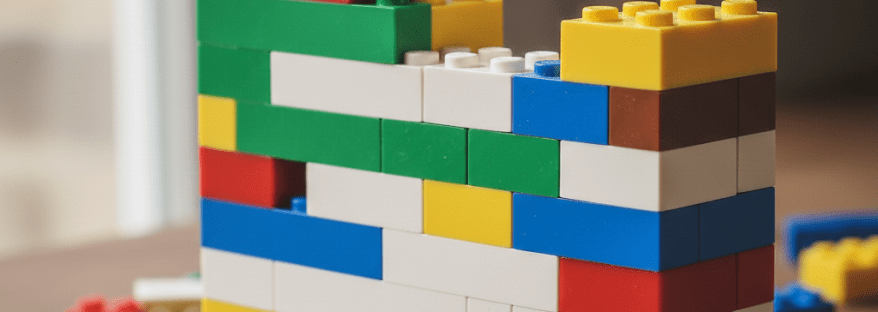
Habits are like Lego pieces

Some of my favourite memories with my son are working together to build the increasingly complex Lego kits over the years. Step by step, piece by piece, we created most of the Star Wars kits available at the time. The look on his face and the sense of accomplishment as he placed the final piece still warms my mother’s heart.

Healing is not a kit, there is no final piece. It’s an ongoing process that never ends until you take your last breath. That’s true for all humans, not just those dealing with chronic illness. 

But every piece you add to your routine builds the structure of your healing journey. You have to go slowly, to make sure that piece is secure before you add a new piece. But, unlike a Lego kit, it doesn’t matter what order you add the pieces, just that you do.

Mindset is the Instruction Manual

The reason I’ve been focussing on mindset, inner dialogue and self-compassion in my Blog 2.0 posts, is that it’s really the equivalent of the Lego manual.

Yes, you can add pieces in whichever order works best for you. But if you’re telling yourself, ‘Well, I’ll try it but I don’t believe it will work’, or your deep belief is ‘they said it’s incurable so why bother’, or when you get off track your inner voice says ‘you’re useless, I knew you couldn’t do it’, then you’re essentially taking away pieces faster than you can add them.

Mindset is the manual and the foundation. So if you’re whirling in the confusion of information overload, start with building a positive mindset. It can be as simple as mindful breathing. Or saying ‘good morning beautiful’ into the mirror every morning.

Healing is possible. Your habits will get you there.

❤️ Amanda

Coffee and contemplation every morning, one of my favourite habits

chronic illness, healing, MS

Finding Hope in MS: 2 Healing Tips

Remember that feeling when you first heard ‘MS’? Like someone just handed you a puzzle with no picture, half the pieces missing and said ‘good luck!’

The overwhelm is real. Medication, or not? Can I still work? How do I tell people? Will I end up in a wheelchair? And on and on. The carousel of terror you never signed up for.

 My 23 year diagnostic odyssey ended with a neurologist saying, “Based on your MRI and history, you have MS. Take these (handing me a 10 pound stack of pharmaceutical information) and pick one.” That was the first time I understood the impulse to throat punch someone.

Here’s what I wish someone had whispered in my ear during those early, scary days. “MS isn’t the end of your story, and it’s not your identity.”

Here are 2 simple things that brought me back from the edge. Healing isn’t easy, but it is simple.

2 Game-Changing Tips

Tip #1: Why I Talk to Trees Now

In the early days, when it was hard to even get out of bed, the thought of going outside was as appealing as a quick hike up Mount Everest.

Eventually I dragged my butt out the back door and sat in a chair, staring at the garden. It felt like punishment. At first.

Watching the birds fly overhead, the leaves dance in the breeze and the flowers slowly open their faces to the sun, woke something up in me. Something that became a major ingredient in my healing journey.

The more time I spent outside, the better I felt. Something about just being there started restoring my energy.

Barefoot in the grass or on a beach, sitting under trees. On cold, rainy days, even staring at houseplants.

Sometimes sitting in my car at the beach or a park with the window open.

When all else failed, on ‘bed days’, I’d search “nature meditation“ on YouTube. Tim Janis is a great channel and doesn’t get interrupted by ads.

Trees don’t judge if you cry at them. Trust me, I’ve tested this. Those tree huggers are on to something. I wrap my arms around a tree and whisper my thoughts. Call me crazy, but the tree whispers back. And my nervous system downshifts and relaxes.

Actionable step: Aim for 5 minutes outside daily.

First thing in the morning is best and will improve your sleep. More time is obviously better, but doing it daily is the most important.

Start small so you can achieve it every single day. That’s how you make progress.

Tip #2: The Vertigo Solution I Didn’t Believe Would Work

Stress is the mortal enemy of MS. Living with MS is very stressful. It’s a vicious cycle.

MS stress amplifies everything. Things that wouldn’t have bothered you before, pluck those stress strings and have you vibrating (literally) with unwelcome negative energy.

How do you take back control? You pay attention to a process your body does automatically, adjust it and use it to your advantage.

In my last post, I talked about baby belly breathing. You’re born with the ability to breathe deeply and oxygenate your body properly. As you grow and get exposed to the inevitable stress of being human, you lose that ability.

Early on, I struggled a lot with vertigo and light-headedness. It’s like living in a fun house, minus the fun. When I learned to breathe properly and added specific breathing techniques, the vertigo loosened its hold over time and I stepped out of the fun house.

Actionable step: 4-7-8 breathing

  • One hand on your belly
  • Inhale through your nose for 4 counts, feel your belly expand
  • Hold for 7 counts
  • Exhale through your nose for 8 counts
  • Repeat for 3-5 rounds

Healing is possible

This is just the beginning of your journey. I know you want to feel better right now. Find that well of patience inside, practice consistently and be kind and compassionate with yourself. I promise you will start to see results.

Last week, I was hugging a tree in the park, releasing some difficult emotions. A woman walked by and winked at me. I walked past her a few minutes later, now she was hugging a tree with a huge smile on her face. What once felt a bit silly, now feels like wisdom.

What’s one small thing you’ll try this week? Let me know in the comments.

You’re not alone.

❤️ Amanda

chronic illness, mental health, MS

Big feelings after MS diagnosis: What I’ve learned in the decade since

First, relief. An answer to the strange symptoms that quickly consumed my life. See, I’m not making it up. It’s not all in my head. Except, uh, it was.

In no time, relief morphed into terror at the possibility of a very bleak future.

Three days after diagnosis, I found myself in the grocery store, choking on sobs as I reached for the Honey Nut Cheerios. How to make friends and influence people.

Everything felt impossible. Like I was walking through mud. Breathing took all my energy. My brain was on strike. The neurologist handed me a two foot tall stack of pharmaceutical pamphlets textbooks and said, “Pick one.” Not. Helpful.

I was on my own. So I figured it out. S-l-o-w-l-y. Let me help you get there faster.

My Post-Diagnosis Survival Kit (also handy for general life, especially these days)

1) First lifeline: Stepping outside for 5 minutes, and staring at the sky.

There’s something about the wide expanse of the sky that calms the swirling thoughts and grounds you in the reality that the planet’s still orbiting the sun and life keeps moving forward. 

Even when it feels like your life has crashed down around you.

2) Game-changer discovery: A simple breath technique that works. Baby belly breathing and extended exhales.

First let out a big exhale. This tells your body you’re not in imminent danger and immediately calms down the nervous system.

One hand on your belly. Inhale through your nose for 4 counts, feeling your belly expand.

Exhale through your nose or mouth for 6 counts, feeling your belly deflate.

Five minutes of deep belly breathing and your thoughts stop swirling. Your body shifts into a lower gear.

3) Five minute rule: This became my rule for healing that changed everything. You can do anything for 5 minutes, even on the hardest days. Walking, cleaning, cooking, crying… anything.

Once you prove it to yourself through consistency, it automatically makes you want to do more. That’s how change happens.

Small Shifts, Big Changes

Healing isn’t about giant leaps. And you can’t just heal your physical body. It’s an ‘all hands on deck’ situation of body, mind and spirit. It requires patience, self-compassion and consistency.

But healing is possible. Even if MS is incurable.

The mindset shift: From fixing everything to just doing one tiny thing.

Some days you have to congratulate yourself for moving from the bed to the couch. Or brushing your teeth. Or choosing an apple instead of the cheesies calling your name.

It all counts, and it adds up. 

What I’d Tell My Newly-Diagnosed Self

Your overwhelm is temporary.

You don’t need to figure it all out today.

MS doesn’t get to write your whole story.

You’re already braver than you know.

Your One Next Step

Three micro-actions:

  – Step outside for 5 minutes

  – Try five baby belly breaths, in for 4, out for 6

  – Say one kind thing to yourself

Start with just one.

Remember: You’re not alone in this.

I see you. You got this!

❤️ Amanda

life, mental health

Learning to Be

The world has stopped. The unthinkable has happened and we’re in crisis mode, trying to get our heads around this ‘new normal’.

I’ve been here before.

No, not exactly like this, obviously. But almost five years ago, my world stopped when I finally admitted I couldn’t teach anymore. I’ve been adapting to my new normal ever since. It’s been a bumpy ride, but there have been many surprising blessings as well.

Learning to be. This is a big one. We are so inundated with messages telling us we need to be doing something all the time. There’s a culture of busy-ness, where the more you’re doing is like a badge of honour. When you have a chronic illness, that’s not really an option because the fatigue, among other things, is so killer that You. Just. Can’t.

So you spend a lot of time at home, sitting around, isolated, without a whole lot of options for entertainment. Sound familiar? I’m sure it’s a new experience for most healthy people, and it can be uncomfortable just sitting in your own skin sometimes. Or maybe that’s just the MS. 🤔

But just being, instead of always doing can be a wonderful opportunity to get real with yourself and figure out what’s really important. We’ve been conditioned to believe we need to be working, be productive, be entertained, be adventurous, be travelling , be consuming, be socializing.

We’ve forgotten that sometimes it’s important to just BE.

When you stop doing and sit quietly with yourself, your mind has space to process. This is why meditation has become so popular. But you don’t even have to be that organized about it. I’m not knocking meditation in any way, I’m just suggesting that you pay attention to whether you take any time during your day to stop doing and just BE.

Staring at nature is my go-to for times when I need to stop and be for awhile, even if it’s just out the window, or the nature channel on TV. I guess that’s technically doing something but the mental health benefits outweigh any slicing of that proverbial hair.

We’ve been running on the societal treadmill for so long that doing nothing, just BEING is a difficult thing for many people right now. I get it. Like with anything though, a shift in perspective can change this strange situation we’re finding ourselves in, into an opportunity to examine our values and decide if we really want to go back to the “old normal”.

As much as I miss teaching, I am grateful every single day for my many blessings. Learning to be comfortable with just being and not doing all the time has helped me enormously in accepting my new normal. I hope it helps you too.

Just be.

Hummingbird in flight feeding
Look what you can see when you stop doing for a few minutes. Just be.
Photo credit: Amanda L. Callin

❤️ Amanda

Health, life, mental health

Love. Not Fear.

View at Medium.com

It has been far too long since I’ve published anything but this article is important enough to share. If you allow your fear to spiral out of control, that lowers your immunity and makes you more susceptible to getting sick.

Stay informed, but focus on connection and gratitude. Turn off the screens and get outside. Wash your hands, and stay home unless it’s essential to go out. Stay safe and healthy out there!

❤️ Amanda